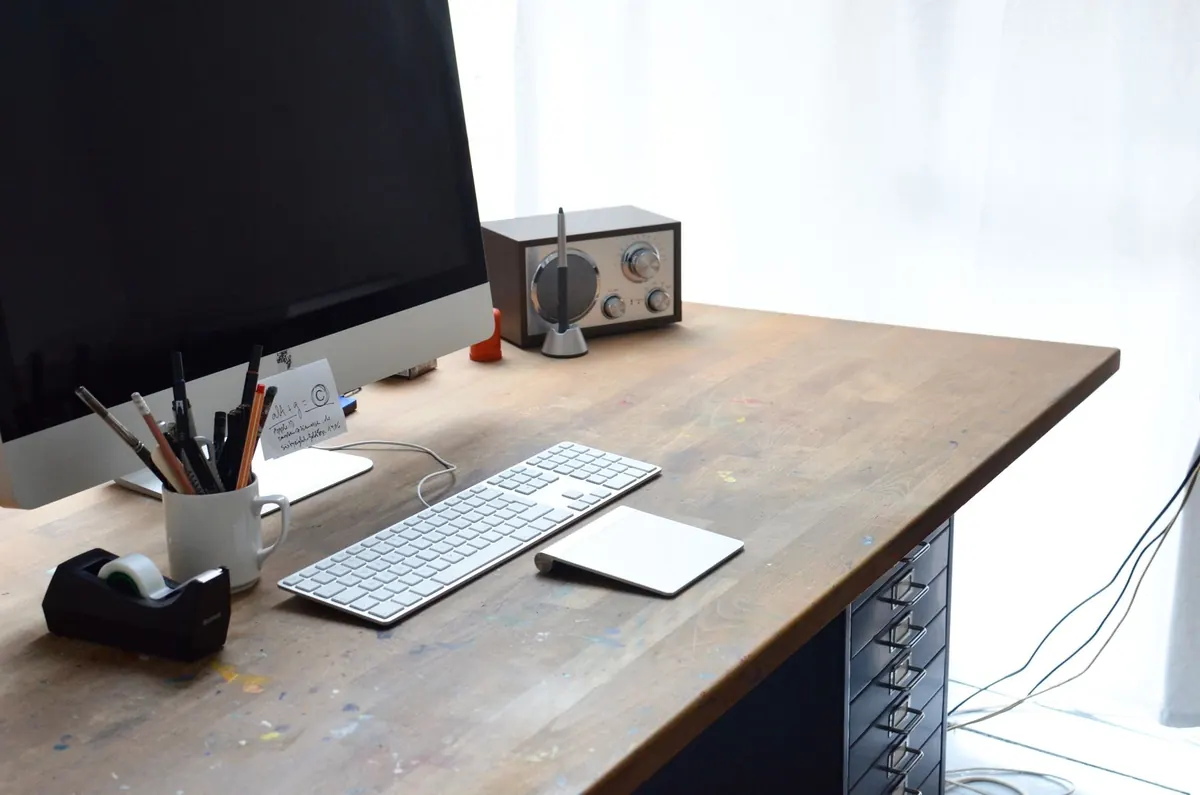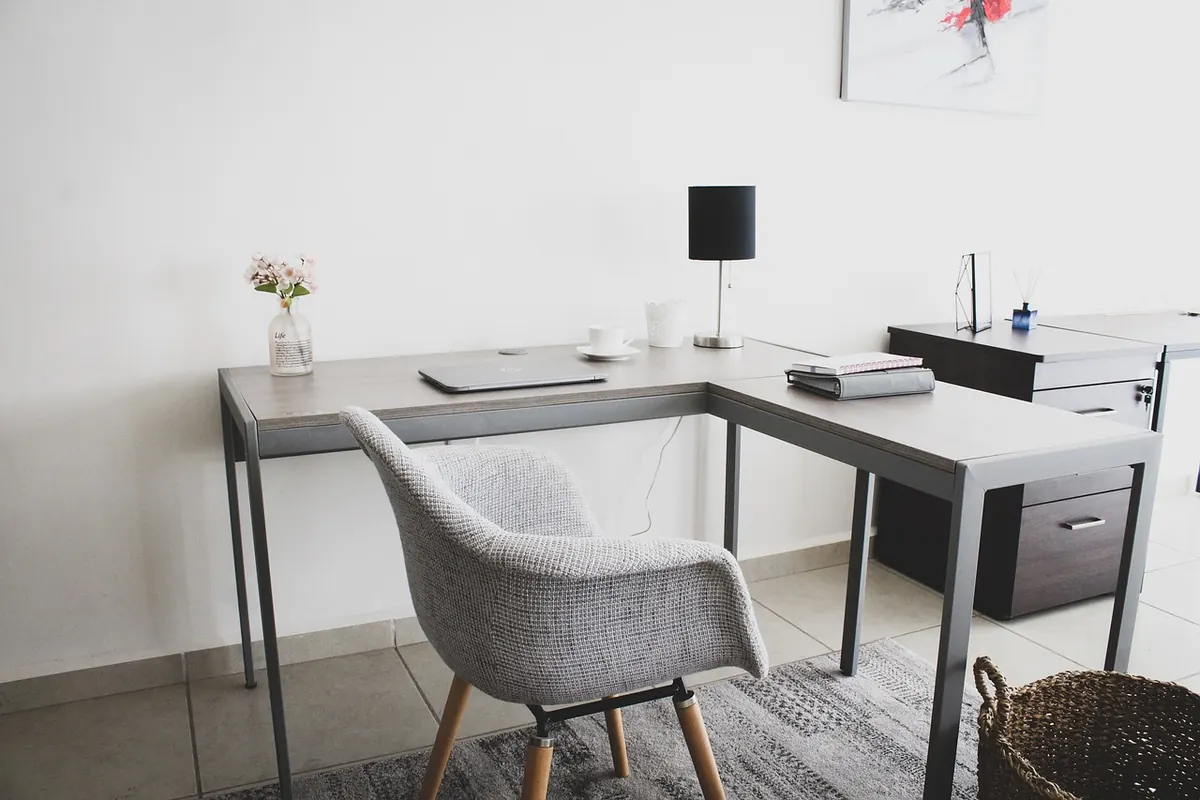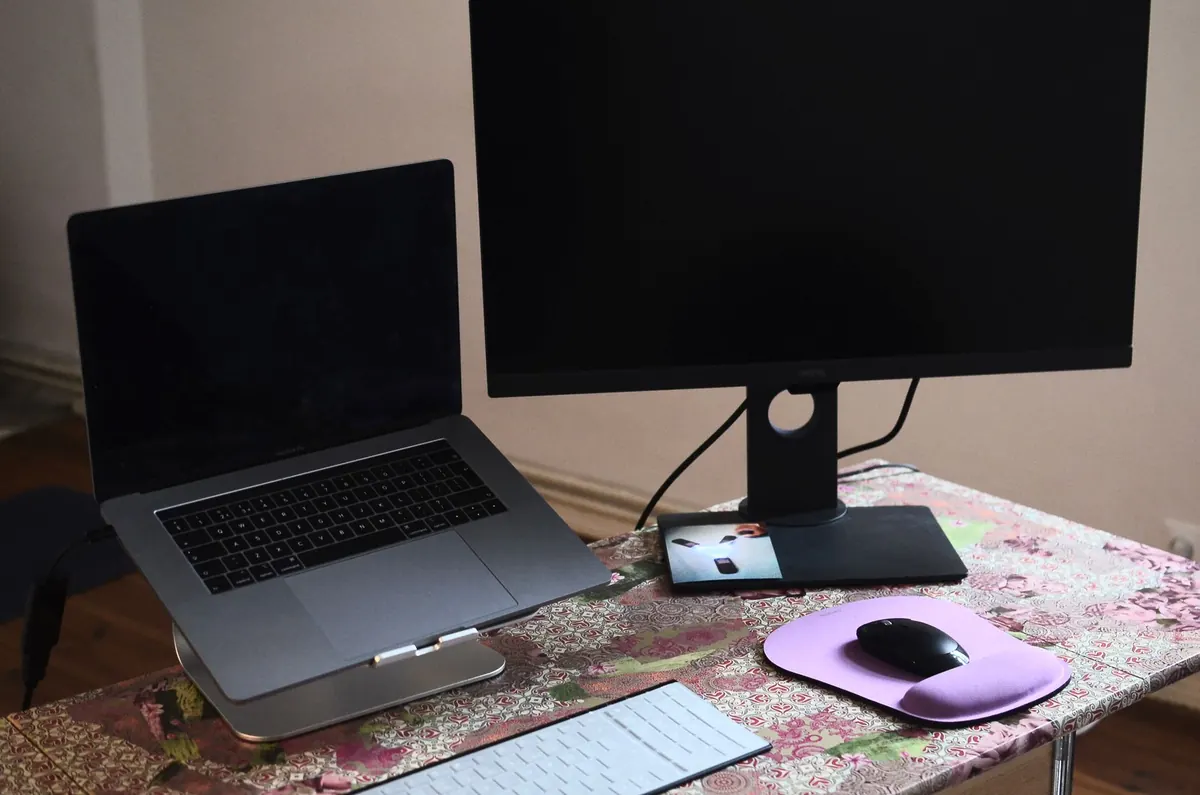
Most small bedrooms have one: a corner holding a laundry basket, a guitar case and a stack of things that never found a home. It rarely looks like an office. With a tape measure and a Saturday afternoon, it can become one. You do not need a spare room, a renovation or built-ins. You need roughly a metre and a half of wall, a door that closes, and a plan for where the light, the power and the paper are going to live.
Here is the order of work that saves the most money and frustration.
Measure Before You Buy a Single Thing
Furniture bought for a corner that does not exist is the most common mistake in small-space setups. Measure first, write the numbers down, and take the tape measure to the shop with you.
- Both wall lengths, from the corner to the nearest obstacle — a window, a radiator, the edge of the wardrobe.
- How far the bedroom door and any closet door swing into the space.
- Where the outlets are, and how many. One outlet in the wrong corner changes your whole layout.
- The height of the windowsill, radiator or baseboard heater. A desk with drawers will not sit over a radiator, and you would not want it to.
- Which way the window faces and when the sun lands on that corner. Direct afternoon sun on a monitor is a daily problem, not an occasional one.
Then mark the footprint on the floor with painter's tape: the desk, the chair pulled out, the walking path to the door. Live with it for a day. If you have to sidestep to get past, the desk is too wide.
Pick a Desk That Fits the Corner
A corner desk with an angled front looks efficient but often wastes the deep corner and forces you to sit off-centre from your screen. A simple rectangular desk along one wall usually works better. It gives you a straight posture line and a clear stretch of wall for shelves and a lamp.
Depth matters more than width. Fifty centimetres is the practical minimum for a laptop and a notebook; sixty is comfortable for a monitor on a stand. Desk height generally sits around 72 to 75 centimetres. Before buying, sit at the display model and check that your forearms rest level with the surface without hunching.
If the room also has to work as a guest room or a workout space, consider a wall-mounted drop-leaf desk, a slim console table, or a small desk on locking casters that rolls back into the corner when you are finished. Whatever you choose, keep the window clear if it is the only source of daylight in the room.
Do Not Compromise on the Chair
The desk can be a repurposed table. The chair cannot be an afterthought if you sit in it for hours. Put the largest share of your budget here.
Give the chair room to move: you need roughly 80 centimetres between the desk edge and the wall behind you to push back and stand up without scraping. If that is impossible, look for a chair with a low, narrow back and no bulky armrests, and accept that you will angle it to get up. A firm dining chair with a cushion is fine for an hour a day. For a full working week, choose an adjustable chair with a height that puts your feet flat on the floor and your elbows close to desk level.
If you already have persistent neck, back or wrist pain, treat the setup as a health decision and get advice from a physiotherapist or an occupational health professional rather than guessing from a product page.
Light the Desk Twice
A single ceiling light behind your chair throws your own shadow onto the keyboard and glare onto the screen. Fix it with two sources: ambient light for the room and a task lamp at the desk.
Place the lamp on the opposite side from your writing hand so your hand does not shadow the page, and aim the shade down at the desk surface rather than towards your eyes or the monitor. A neutral white bulb is easier on the eyes for close work than a warm yellow one, and a dimmable lamp lets you bring the level down in the evening.
If the desk faces a window, turn the screen perpendicular to it. If it cannot be moved, an angled blind is cheaper than new furniture and solves most glare.
Build Up, Not Out
In a small corner, floor space is the expensive part and wall space is free. Keep the desk surface for your hands and one screen, then send everything else up or under:
- One or two wall shelves above the monitor, mounted a hand-width above the screen so they do not crowd your view.
- A pegboard or a strip of hooks for headphones, cables, keys and a stapler.
- A slim rolling drawer unit that tucks under the desk and pulls out when you need it.
- A single document box for paper. When it is full, deal with it — a corner cannot hold an archive.
- A cable tray or adhesive clips under the desktop, so the floor stays clear for your feet.
Mount shelves into studs or use proper wall anchors, and keep the heaviest items low. If you rent, choose freestanding or tension-mounted options and check your lease before drilling.
Make the Corner Feel Like Its Own Room
A desk in a bedroom is still a desk in a bedroom at eleven at night. A few small moves draw a line between work and rest.
Angle the desk so your camera faces a wall rather than the bed. Add a rug or runner that covers only the working zone. If there is space, a narrow bookcase at the side of the desk screens the corner without blocking light. Use one treatment in that area — one shelf colour, one lamp, one chair — so it reads as a deliberate spot rather than overflow storage.
Then build a closing routine. At the end of the day: shut the laptop, push the chair in, drop the papers in the box, switch off the lamp. It takes twenty seconds, and it is the difference between finishing work and leaving work sitting in the room. If you share the home, headphones and a felt pad under the chair keep the noise down.
Live With It Before You Add More
Set up the essentials — desk, chair, lamp, one storage solution — and use the corner for a week before buying anything else. You will learn where you actually reach for a pen, where the cable annoys you, and whether the shelf above the monitor sits too high. Buy the small fixes after that, not before.
A folding table and a decent chair will carry you for months while you save for the pieces that matter. The corner does not have to look finished on day one. It has to work well enough that you stop noticing it, which is the highest compliment a small workspace can earn.
Photo: karishea / Pixabay