You sit down to work, and before you type a sentence you move a mug, straighten a cable, close a notebook, and wonder — briefly — whether the plant needs water. Four tiny decisions, none of them about the work you planned to do.
That's the real argument between minimalist and maximalist desk setups. Not which one photographs better, but which one gets you into the work faster and keeps you there when the task gets hard. Both can. Neither wins by default.
What Each Style Actually Means
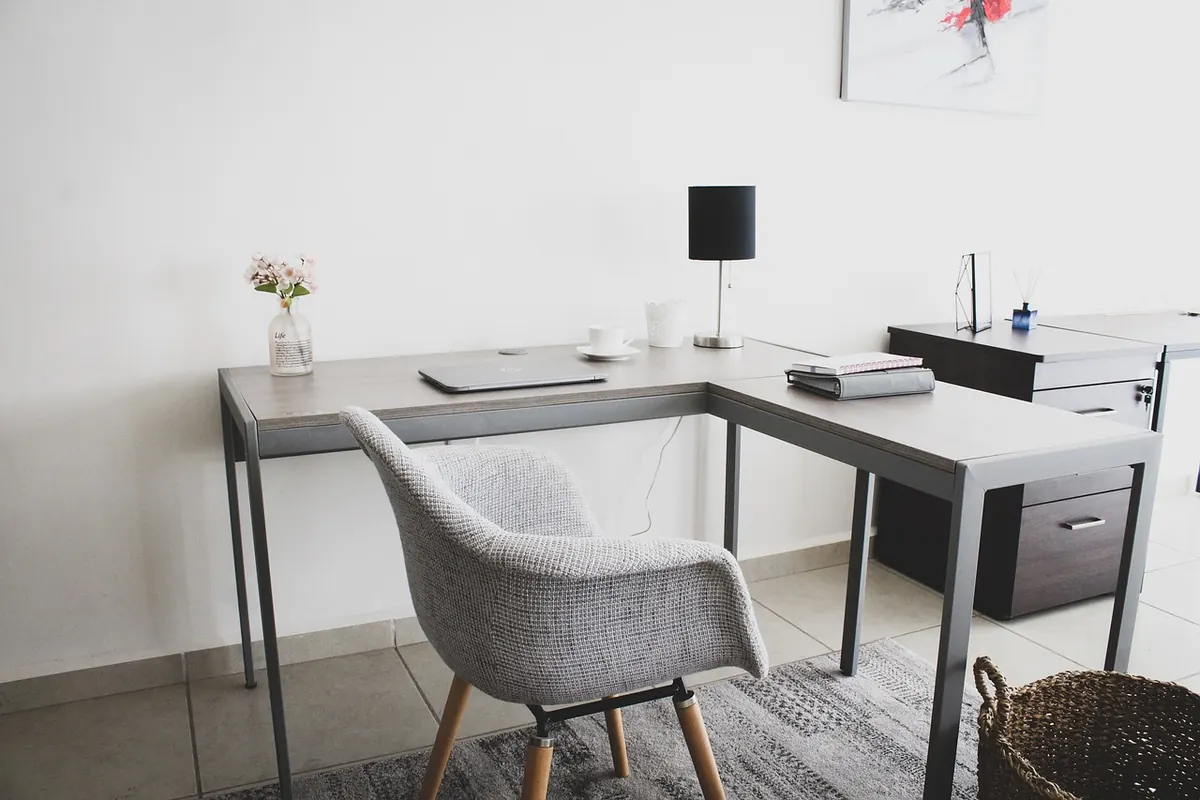
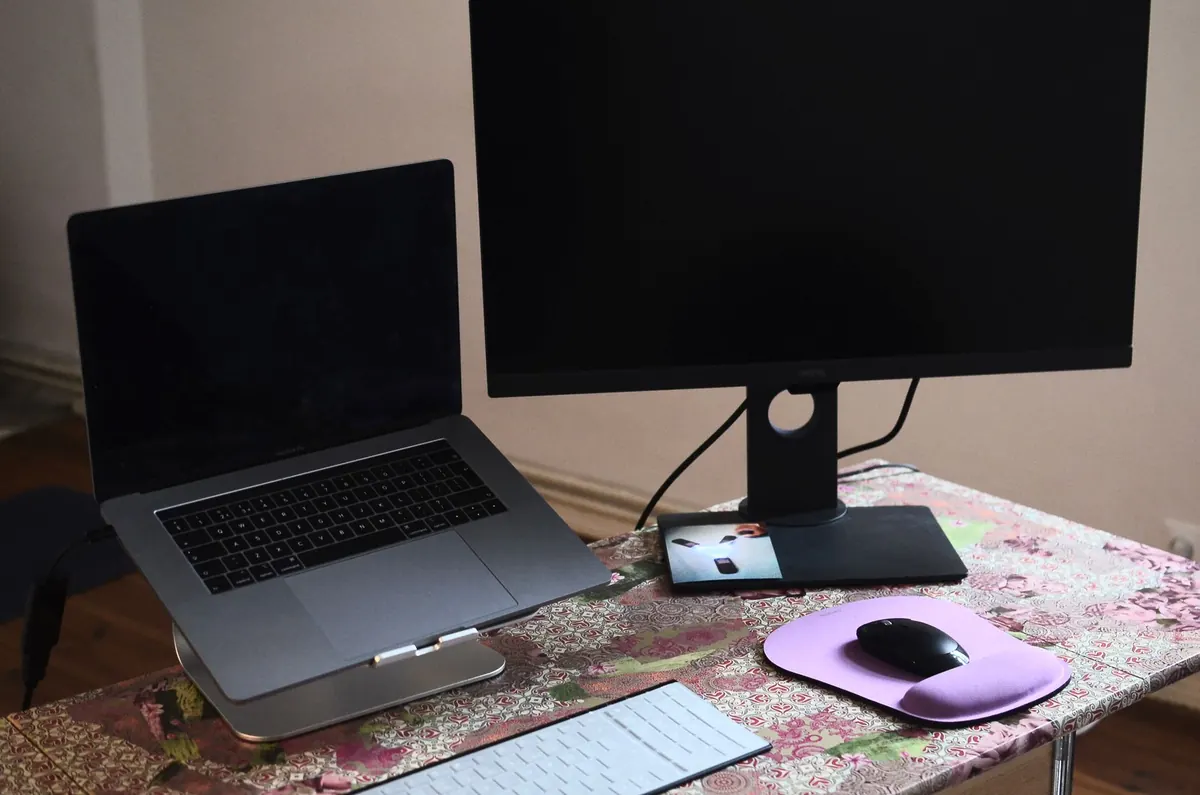
A minimalist desk isn't necessarily an empty one. It's a desk where the working surface stays clear and everything else has a home — behind a door, in a drawer, or on a shelf out of your sightline. Few objects, one visual anchor: a lamp, a monitor, a single plant.
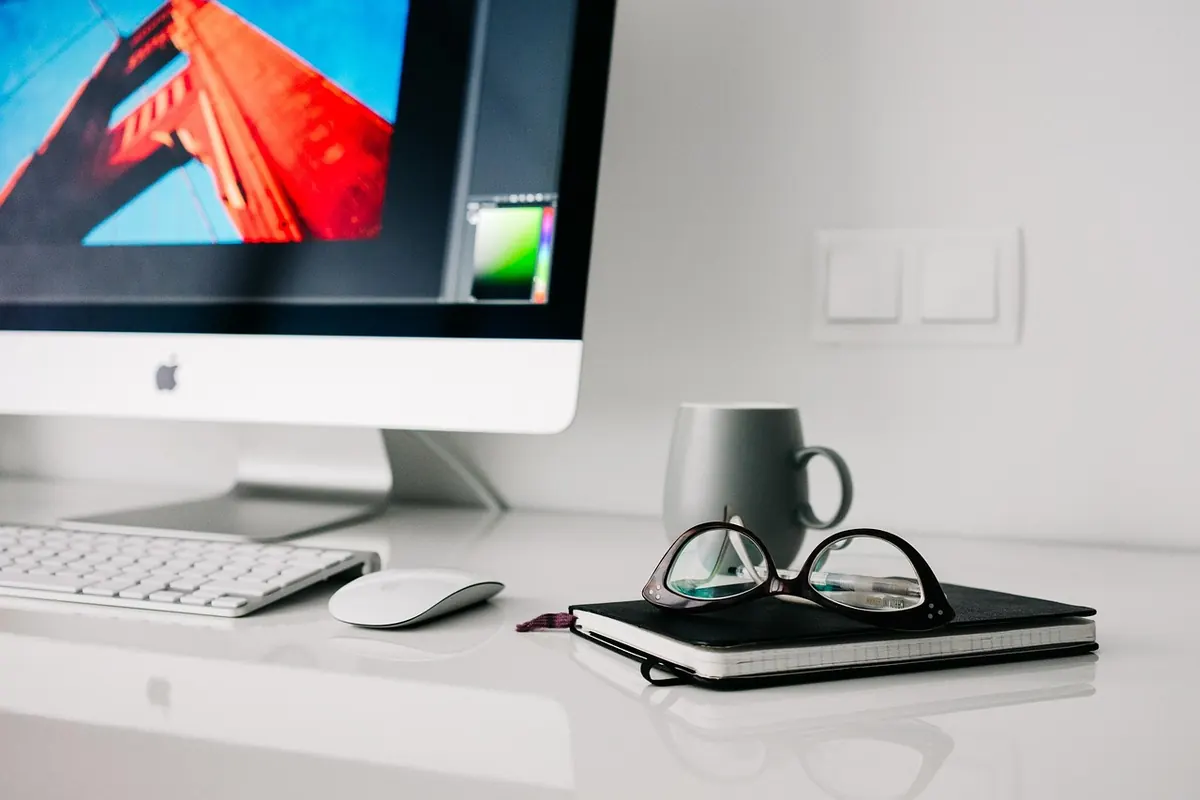
In practice that might look like a laptop, a lamp, a notebook, and a pen. Everything else — chargers, printer, mail, reference books — still exists. It just doesn't exist in your field of view while you're thinking.
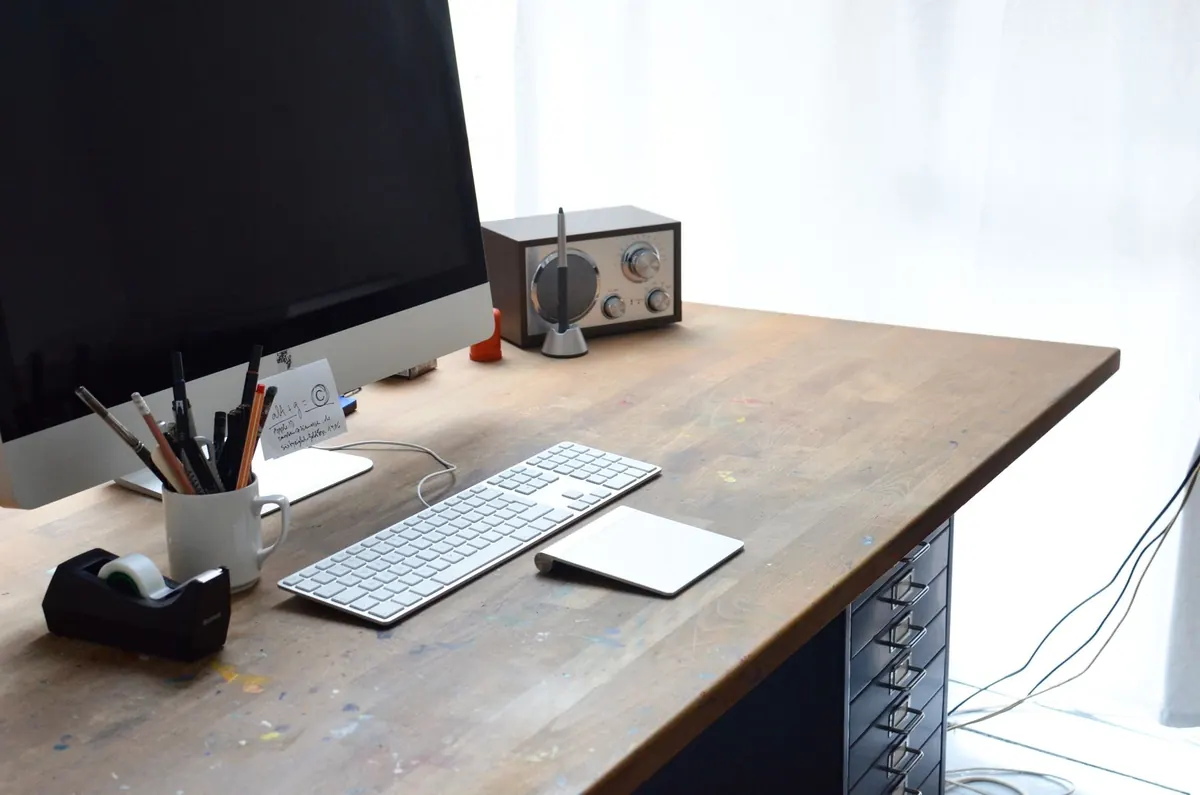
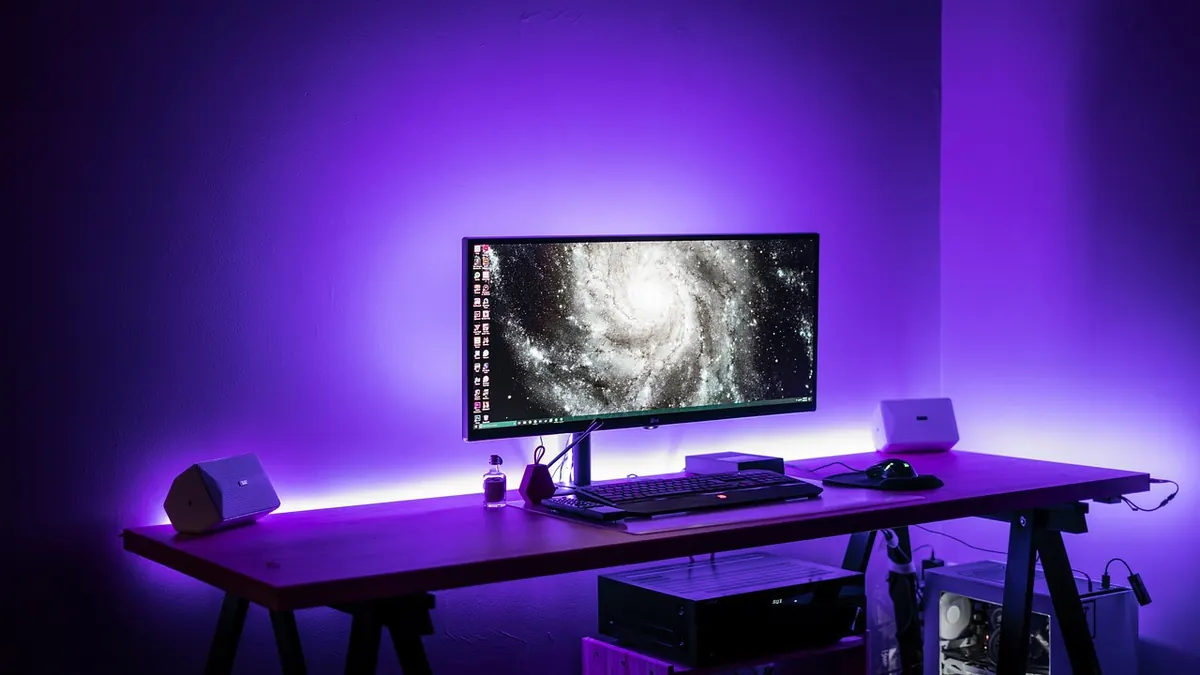
A maximalist desk goes the other way: density on purpose. Reference books within reach, a pegboard of tools, pinned sketches, two screens, plants, a tray of pens.
Picture an illustrator's desk: three jars of brushes sorted by size, a lightbox, a stack of paper samples, a wall of pinned thumbnails. It looks chaotic from the doorway. From the chair it's a control panel.
The distinction that matters is intent. Maximalism isn't mess. Mess is objects with no home and no job. A maximalist desk can be entirely deliberate, every item earning its square inch — while a minimalist desk can be a lie, clean on top with chaos in the drawer.
The Real Variable: What's Competing for Attention
Your peripheral vision isn't neutral. Anything in view that suggests an unfinished task — a bill, a half-read book, receipts, a hobby project — keeps a small loop open in your head. You don't consciously read the pile. You register it anyway. Fifteen objects like that and you've built a room that quietly nags.
Researchers call the leftovers "attention residue": even after you walk away from a task, part of your mind stays attached to it. A desk covered in half-finished things is a machine for generating that residue on demand.
Objects are cues, though, and that cuts both ways. A visible notebook can pull you into work you care about. A guitar leaning against the wall is either an invitation or an accusation, depending on the day. So the question isn't how much stuff you own but which prompts you want running in the background. A plant is neutral. A tax envelope isn't.
Where Minimalism Wins
Minimalism's advantage is friction — or the lack of it. A clear surface means fewer micro-decisions, and fewer micro-decisions mean an easier start. That matters most for sustained single-task work: writing, coding, editing, studying, anything where a twenty-second glance costs you ten minutes of momentum.
Three habits do most of the work:
- One-touch clearing. When you finish with something, it goes to its home, not to the edge of the desk. Desk edges are where piles are born.
- A three-minute end-of-day reset. Timer on, mug to the kitchen, papers in the tray. Tomorrow's easy start is today's last three minutes.
- Nothing on the surface that isn't for today. Tomorrow's work belongs in a drawer, even if the drawer is right beside you.
The failure mode: some people need the reminder. Hide the sketchbook and you forget you draw. Hide the running shoes and you forget you run. And a clean desk can be a performance — spotless on top, unmanageable underneath. If you can't find things, the clutter hasn't gone anywhere. It has simply moved to a place where it costs you five minutes every time you need a stapler.
Where Maximalism Wins
Maximalism works on a different principle: tools you can see are tools you use. If your work runs on references and materials — illustration, electronics, sewing, three writing projects at once — a visible wall of resources can beat a tidy drawer system. Reaching beats remembering.
There's a real cognitive trick underneath that. Your brain is unusually good at spatial memory: you know the red pen is in the left cup without looking. Every object you can see and locate instantly is one less thing you have to hold in working memory. A drawer that hides your tools also hides the fact that you own them.
Maximalism stays functional when it follows a few rules:
- Vertical, not horizontal. Pegboards, shelves, and rails give you density without eating your working surface.
- Zones with jobs. Tools on the left, references on the right, the current project dead center. Randomness is what turns density into noise.
- An annual edit. Once a year, take everything off the desk. Put back only what you have touched in the last six months. Habits congeal into clutter faster than you notice.
The failure mode is clutter creep: one object at a time, until the desk is a storage unit with a chair. When everything is visible, everything becomes a candidate for your attention — including the things you abandoned last spring. Density without curation is just mess with a story.
The Hybrid Desk: Clear Front, Dense Edges
Most people who have thought about this for more than a week end up here. Divide the desk into three zones and treat each one differently.
- The active zone — the space your arms sweep. Keep it close to empty: keyboard, mouse, the one notebook you're using. Nothing else lives here.
- The reach zone — a shelf, a pegboard, a small tray at the edge of your vision. This is where density belongs. Pens, tools, the single reference book you're actually using this week.
- The dead zone — behind you, above you, inside a drawer. Mail, chargers, finished projects, anything that nags without helping. Out of sight, still accessible.
You get the easy start of minimalism and the fast reach of maximalism. It looks like a compromise because it is one — and it's the compromise most working desks have already stumbled into without naming it.
A Ten-Minute Test
Stop guessing which style suits you. Run this instead, on a day when you have real work to do.
- Clear your desk completely. Leave your computer, a lamp, and a glass of water. Everything else goes on the floor behind you.
- Work for 45 minutes on something hard. Don't tidy, don't organize.
- Note every time you reach for something that isn't there, or catch yourself thinking about something you can't see. A pen, a reference, a charger — that's data.
- At the end, put back only the things you actually reached for. Everything else stays off the desk for a week.
What returns tells you what your desk is really for. If three things came back and you didn't miss the rest, you're a minimalist. If you spent 45 minutes irritated because your tools were on the floor, you're not — you're a maximalist who has been apologizing for it.
An empty desk isn't discipline, and a full one isn't clutter. The only question that pays rent is whether each thing in front of you pulls you toward the work or away from it.
Pick the desk that removes the most decisions between you and the first sentence. Then stop rearranging it and write the sentence.
Photo: StockSnap / Pixabay